
Quick answer
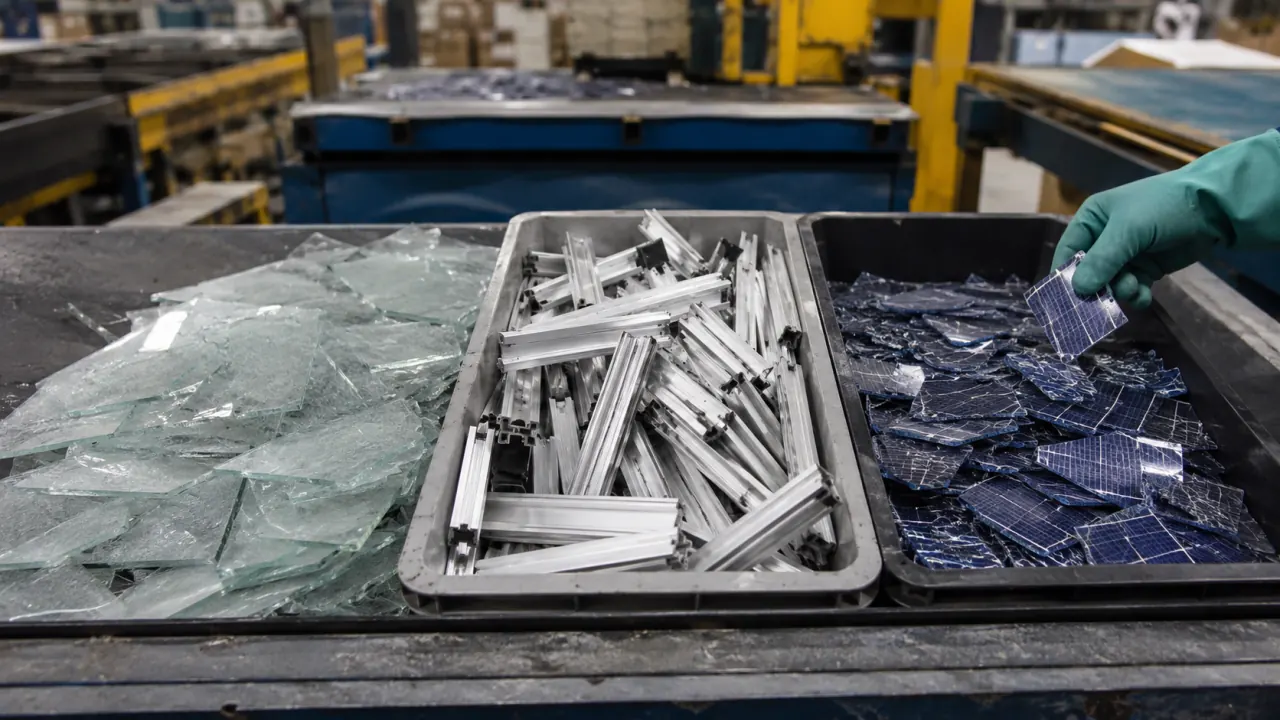
A recycled crystalline-silicon panel yields four main outputs: aluminium (the frame), glass (the front sheet), silicon (the cell wafers) and small quantities of high-value metals — mainly silver and copper from the electrical contacts. What’s actually recovered depends on the facility: 2026 IEA-PVPS Task 12 data shows leading operators reaching around 95–99% recovery for silicon, silver and copper by weight, plus around 90% for aluminium. Recovered glass and aluminium go to construction and remelted-metal streams; silver and copper are refined for reuse; silicon can be recovered as high-purity feedstock for new cells or downgraded to industrial silicon.
What a panel is made of
A crystalline-silicon panel is mostly glass and an aluminium frame, with a thin sandwich of silicon cells connected by copper ribbons and silver-based paste, sealed by polymer encapsulant. The Clean Energy Council puts the theoretical recyclable share of a panel at around 95% of its material by weight. This article focuses on the other question: of the materials that go into a recycler, how much of each actually comes back out? The by-weight composition is covered separately in where old solar panels go and can you recycle solar panels — we don’t reprint it here.
What actually comes out
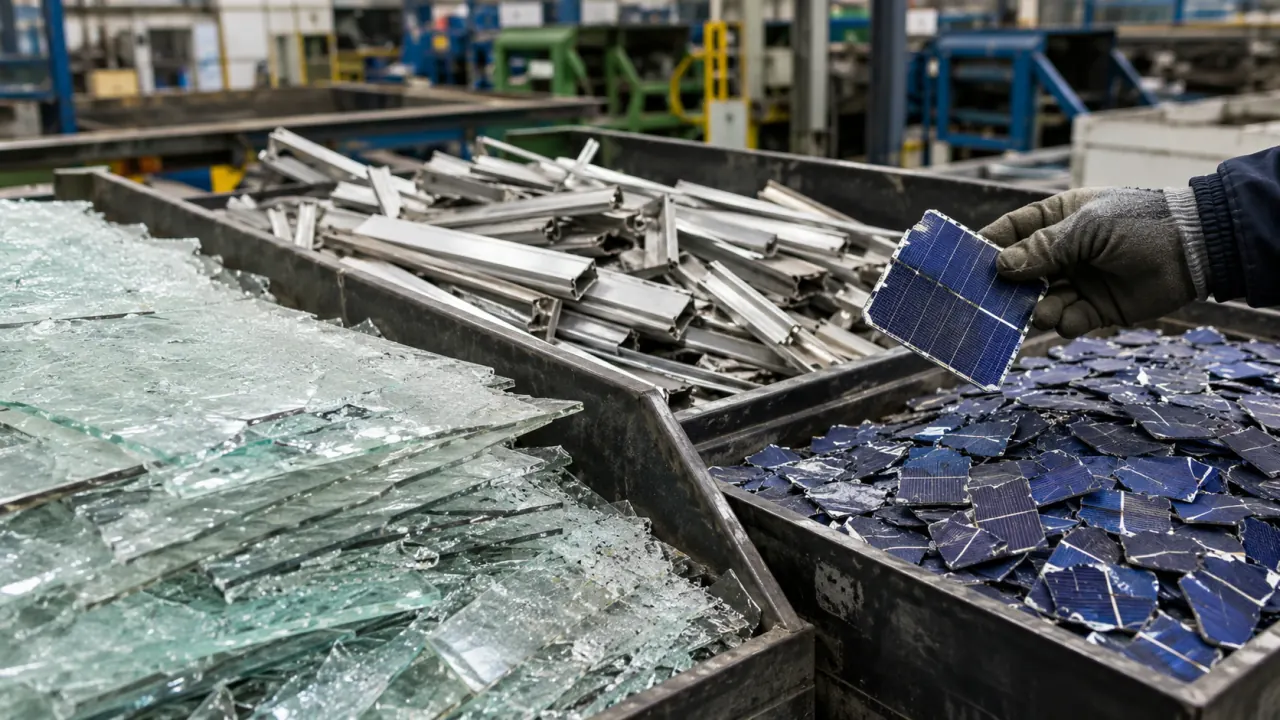
Five recovered streams matter commercially:
- Aluminium — the frame is unbolted or shear-cut off first. It’s the cleanest, most valuable stream by weight and goes straight to the standard aluminium remelting supply chain.
- Glass — the front sheet is the largest single stream. Cullet quality determines whether it’s remelted into new flat/container glass or downgraded to construction aggregate.
- Silicon — the cell wafers themselves. Depending on the process, recovered silicon can be purified to feedstock grade for new photovoltaic cells, or downgraded to industrial silicon (metallurgical/refractory uses).
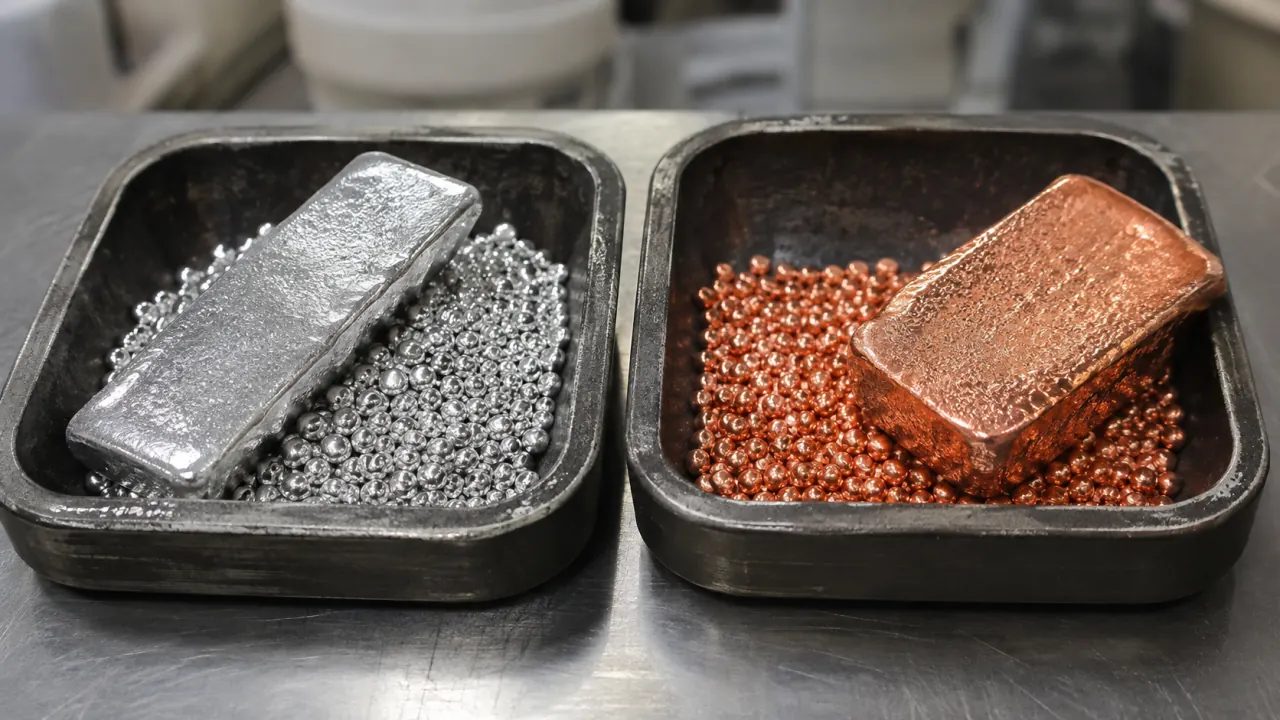
- Silver — trace by weight but disproportionately valuable; recovered from the printed conductor paste on the cell surface.
- Copper — the interconnect ribbons and junction-box wiring, refined and reused as commodity copper.
Real-world recovery rates (2026)
Recovery rates are not a single number — they vary widely by facility and process. According to the April 2026 IEA-PVPS Task 12 global recycling status report, leading operators report the following recovery by weight of input material:
| Material | Reported recovery | Operator (example) |
|---|---|---|
| Silicon | ~98% | SPR (pure-mechanical, commercial) |
| Silicon | ~95% | 9-Tech (pilot, mechanical/thermal/chemical) |
| Silver | ~92% | Solarcycle |
| Silver | ~90% | 9-Tech |
| Copper | ~99% | SPR |
| Copper | ~95% | Solarcycle / 9-Tech |
| Aluminium | ~90% | 9-Tech |
The report notes these figures represent a significant jump on 2024 benchmarks — a pure-mechanical baseline recycling process in 2024 did not recover silicon or silver at all. The improvement is one reason “how recyclable is a panel” and “how much do we actually recover from a panel” are separate questions worth tracking separately.
Where recovered materials go
| Material | Downstream use |
|---|---|
| Aluminium | Remelted into standard aluminium — construction, packaging, new panel frames |
| Glass | Container / flat glass remelt if pure enough; otherwise construction aggregate or insulation feedstock |
| Silicon | High-purity: feedstock for new photovoltaic cells. Lower purity: industrial / metallurgical silicon |
| Silver | Refined to commodity silver; back into electronics and jewellery supply chains |
| Copper | Refined to commodity copper; standard wiring, electronics and construction uses |
Why not 100%?
A few structural reasons material recovery is capped below 100%:
- Panels aren’t designed to be taken apart. The lamination that lets a panel survive 20+ years on a roof is what makes clean separation difficult and energy-intensive.
- Polymer encapsulant, backsheet, sealants and solder don’t map to clean commodity streams the way glass or aluminium do; often they’re incinerated for energy recovery or go to landfill as process residue.
- Trace materials (small quantities of lead in solder, tin, and other minor metals) are usually below the threshold where recovery is economic; they’re handled safely at controlled facilities rather than recovered as commodities.
For Sydney collections
What all this means for a Sydney customer: the pathway a collected panel takes after ReSova picks it up materially changes how much of its content is recovered vs lost. ReSova sorts by condition first (reuse is above recycling on the waste hierarchy) and directs recycling-bound panels to facilities that actually recover the valuable material streams, not just the frame and glass. Check what we accept on the what we collect page.
Key takeaways
- A recycled crystalline-silicon panel yields aluminium, glass, silicon, silver and copper as its five commercially recovered streams.
- 2026 IEA-PVPS Task 12 data shows leading operators recovering ~95–99% of silicon, silver and copper by weight, and ~90% of aluminium.
- Glass recovery is well established but its downstream use (new glass vs construction aggregate) depends on cullet purity.
- Silicon can be recovered as high-purity feedstock for new photovoltaic cells, or downgraded to industrial silicon.
- Recovery is capped below 100% because panels aren't designed to be taken apart — polymers and trace metals often don't map to clean commodity streams.
Frequently asked questions
What materials are recovered from a recycled solar panel?
Mainly glass, aluminium (the frame), silicon (the cells) and small amounts of silver and copper from the electrical contacts. Trace amounts of polymer, lead solder and other metals are usually not recovered as commodity streams.
How much of each material can actually be recovered?
It depends on the facility. According to 2026 IEA-PVPS Task 12 data, leading operators report roughly 95–99% recovery by weight for silicon, silver and copper, and around 90% for aluminium. Glass recovery has improved but varies by process. Older pure-mechanical processes recover mainly aluminium and glass and leave silicon and silver largely unrecovered.
What are the recovered materials actually used for?
Aluminium and glass go into new construction and container-glass streams; copper and silver are refined and reused as commodity metals; silicon can be recovered at high purity for new photovoltaic cells or downgraded to industrial-grade silicon.
Are toxic materials safely handled?
Standard crystalline-silicon panels contain only trace lead in the cell solder (typically under 0.1% by weight), which is sealed inside the panel and not exposed under normal handling. Professional recyclers manage separation under controlled conditions rather than leaving residual materials to leach in landfill.
See what we collect
ReSova collects old solar panels on site across Sydney, then sorts them for reuse or recycling. Check coverage and pricing for your postcode, or talk to the team.